

Career and Technical Education (CTE) has long been promoted as a pathway to workforce readiness, economic mobility, and postsecondary success. For many students, particularly those from low-income households and historically marginalized communities, CTE provides meaningful opportunities to develop practical skills, explore career options, and gain access to employment pathways that could otherwise remain out of reach. Yet access to these opportunities is not equally distributed. While most rural school districts in Illinois face barriers that limit student access to CTE programs, these barriers are especially prominent in districts with high populations of low-income students and students of color. Even though these students stand to benefit most from CTE participation, their rural districts are among the least able to offer critical programming. These challenges are compounded by longstanding funding inequities and assumptions that continue to shape policy conversations about rural education.
The persistent misconception that rural communities are uniformly white and culturally homogeneous lies at the core of this issue, obscuring how districts that serve high populations of marginalized communities are particularly vulnerable. While some rural districts appear to fit this stereotype, others do not. Across the board, rural Illinois is seeing growing racial and ethnic diversity, multilingual populations, and increasing numbers of English Learners and low-income students. Districts such as Freeport School District 145, Cairo USD 1, and Beardstown CUSD 15 demonstrate this. These districts, like others that share similar student populations, face stark economic barriers that make serving marginalized communities even more difficult. Within this context, CTE occupies a particularly vulnerable position. Despite its value, CTE programming is often among the most expensive education offerings to operate and maintain. Equipment, consumable materials, safety requirements, transportation, and specialized staff create financial pressures that many rural districts struggle to meet. The result is a deeper equity challenge within the larger barriers all rural districts face that has significant implications for student success and educational opportunity.
Rural Illinois and The Myth of Homogeneity
The root of the problem begins with a misunderstanding about the makeup of rural districts. Conversations surrounding rural education often rely on an outdated assumption that rural communities are overwhelmingly white and culturally homogeneous. While this perception may reflect some communities, it does not accurately represent all rural districts across Illinois. The consequence is that the particular challenges that marginalized communities, and the schools that serve them, face in rural communities are obscured.
Demographic data from the Illinois Report Card shows that rural districts such as Freeport School District 145, Cairo USD 1, and Beardstown CUSD 15 demonstrate the growing diversity that exists throughout rural Illinois [1]. These districts were selected based on student demographic data indicating that White students comprised 66.6 percent or less of total enrollment, similar to the National Rural Education Associations “Rural Diversity Index” [2]. This criterion was used to identify rural districts where students of color represent a significant share of the student population and to challenge common assumptions that rural schools are predominantly White and demographically homogenous. The selected districts were also chosen to represent a variety of NCES locale codes and REAP eligibility statues, illustrating that rural communities can look very different across regions of Illinois while still facing many of the same education and funding challenges. Collectively, these districts challenge the notion that conversion about racial equity are primarily urban concerns.
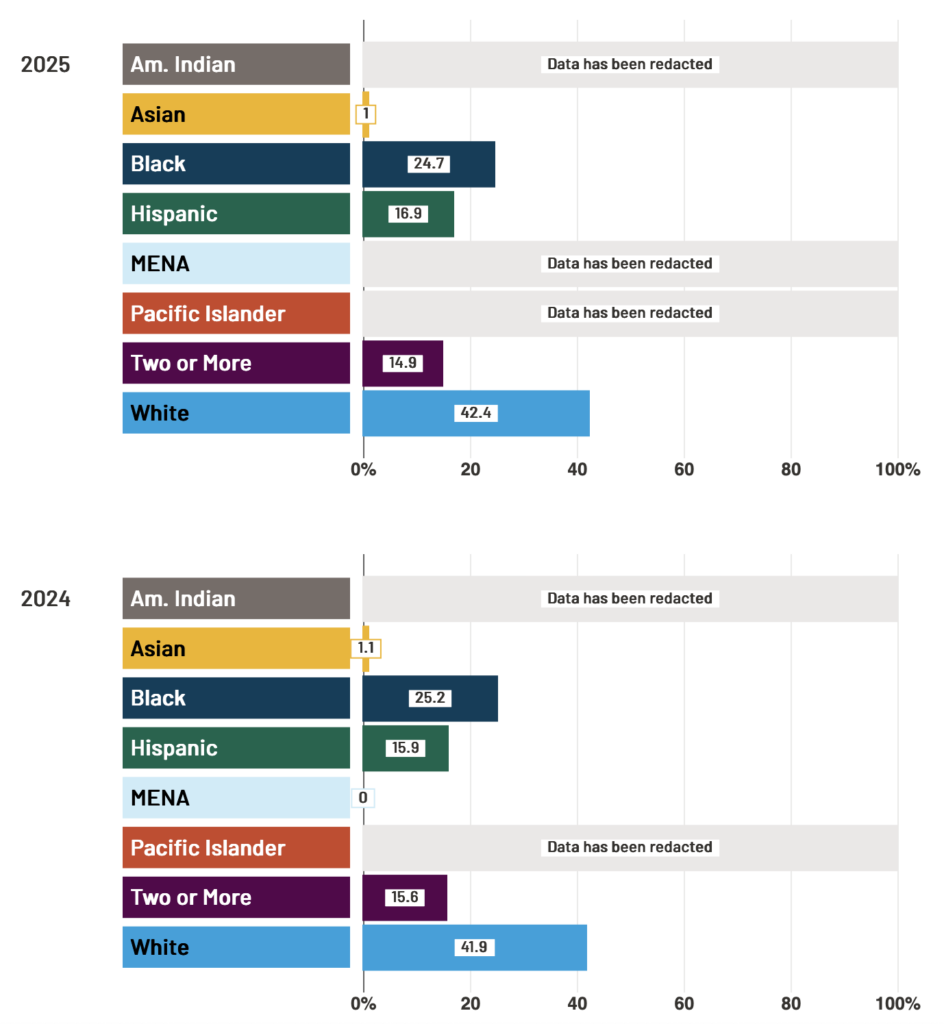
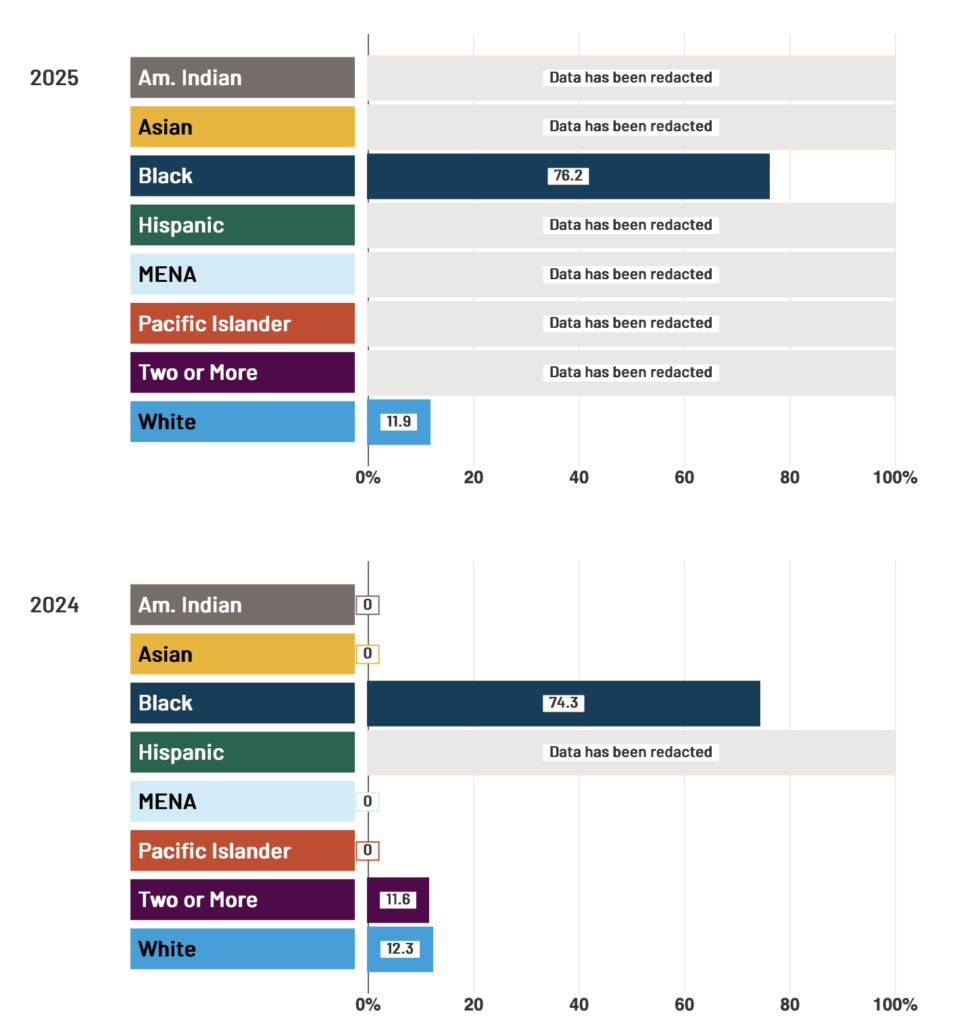
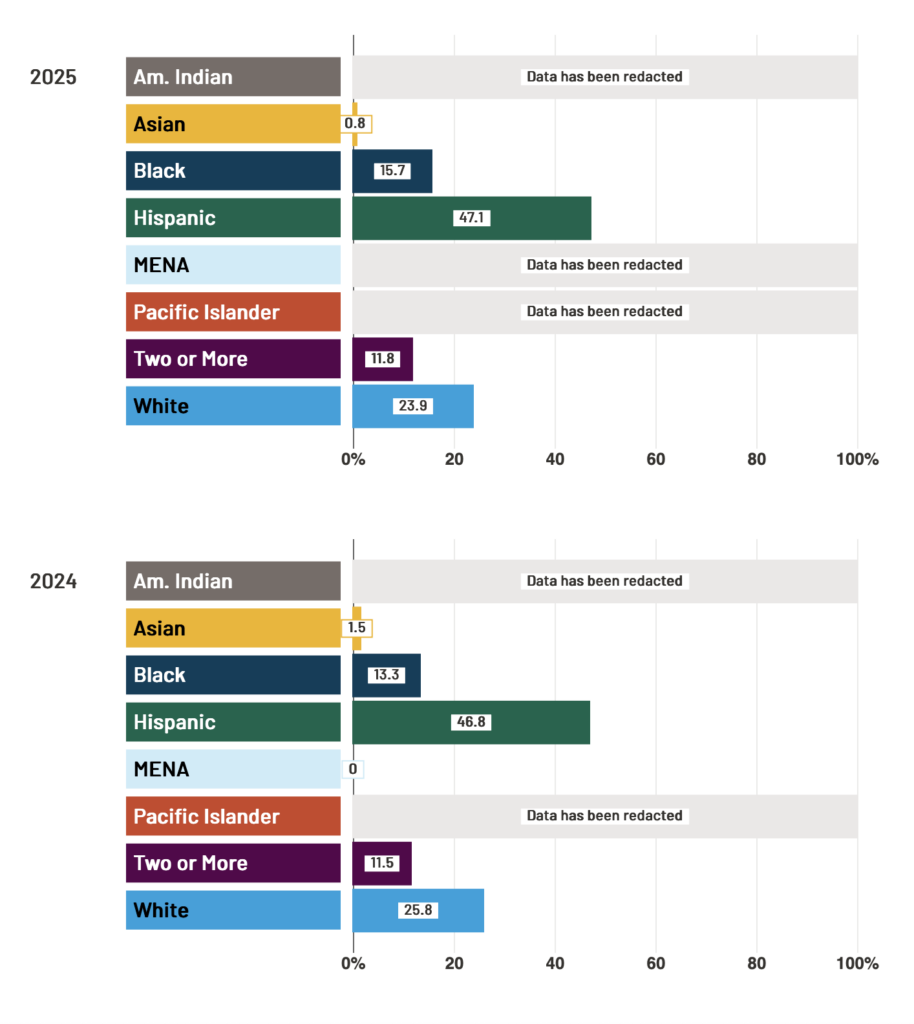
In Freeport School District 145, White students comprise 42.4 percent of enrollment, while Black students comprise 24.7 percent, Hispanic students represent 16.9 percent, and students identifying as two or more races represent 14.9 percent in 2025. No single demographic group overwhelmingly dominates enrollment, illustrating the increasingly diverse composition of rural communities. Cairo USD 1 presents an even more distinct example. In 2025, Black students comprised 76.2 percent of student enrollment, while White students accounted for 11.9 percent. Despite the common misconception about student racial demographics in rural, suburban, and urban settings, this school demonstrates that racial equity concerns extend well beyond those misconceptions. Similarly, Beardstown CUSD 15 serves a student population in which Hispanic students comprise 47.1 percent of student enrollment, making them the district’s largest demographic group. White students account for 23.9 percent, Black students account for 15.7 percent, and students who identify with two or more races comprise 11.8 percent. These demographics reflect broader shifts occurring across many rural communities where increasing diversity is reshaping educational needs and opportunities.
Taken together, these districts reveal an important reality: rural Illinois is not a monolith. 9.6 percent of all Illinois rural districts have 66.6 percent or less White students, including almost 4 percent of all rural districts where students of color are the majority demographic. In each of these districts, students of color make up the majority of enrollment and have either remained stable or continued to grow in their diverse population. Although these districts represent a small share of all rural Illinois schools, their experiences highlight how easily diverse rural communities can be overlooked in statewide discussions of both rural education and educational equity. Too often, state and federal policy discussions frame rural education primarily through the lens of geography and economic disadvantage, without fully acknowledging the racial, cultural, and linguistic diversity that exists within many high-need rural districts.
This miscalculation has important implications for CTE. Students of color in rural communities face the combined challenges of geography, limited program availability, transportation barriers, and historical inequities in educational opportunity. When legislators fail to recognize the diversity that exists within rural communities, the unique needs of these students can become invisible within the broad discussions of educational outcomes. As rural Illinois continues to evolve demographically, it is important that policies designed to improve educational opportunities also recognize that rural and racial equity are becoming increasingly interconnected [3].
Socioeconomic Barriers
Economic vulnerability remains a significant factor that can influence students’ access to expansive educational opportunities, like CTE. Data from the Illinois Report Card for Freeport, Cairo, and Beardstown consistently demonstrate high rates of low-income student populations, defined by Illinois as students who are eligible for free or reduced lunches, live in substitute care, or whose families receive public assistance [4]. In 2025, approximately 77.2 percent of students in Beardstown were identified as low-income, while Cairo reported their low-income student enrollment at a rate of 98.2 percent. Freeport reported a lower rate of 59.5 percent. These rates are notable when viewed In comparison to the broader state and rural averages. Statewide, low income student populations account for 49.7 percent of total enrollment, while among rural districts, low-income students make up 46.6 percent of enrollment. By contrast, each of these districts exceeds both benchmarks, with all three of them serving low-income populations far and above nationwide and rural averages.
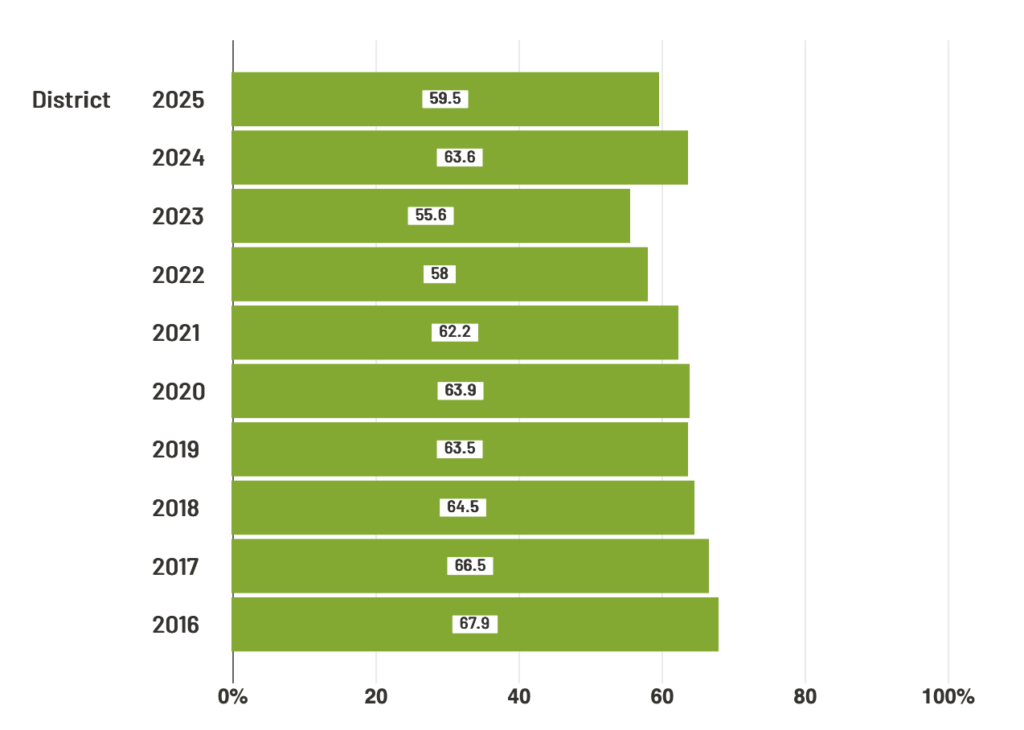
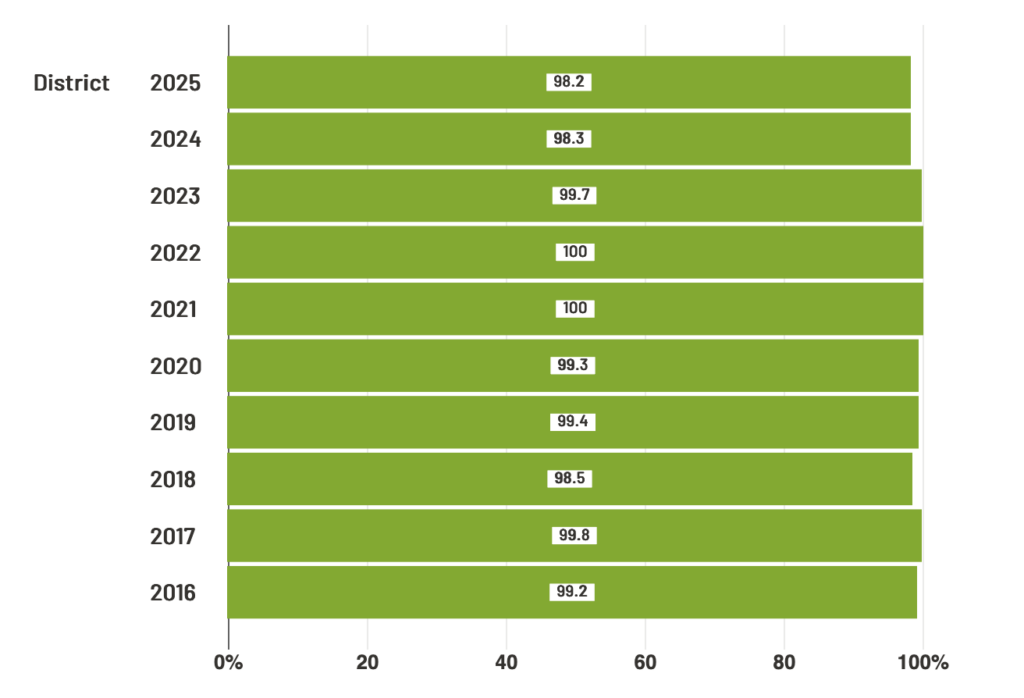
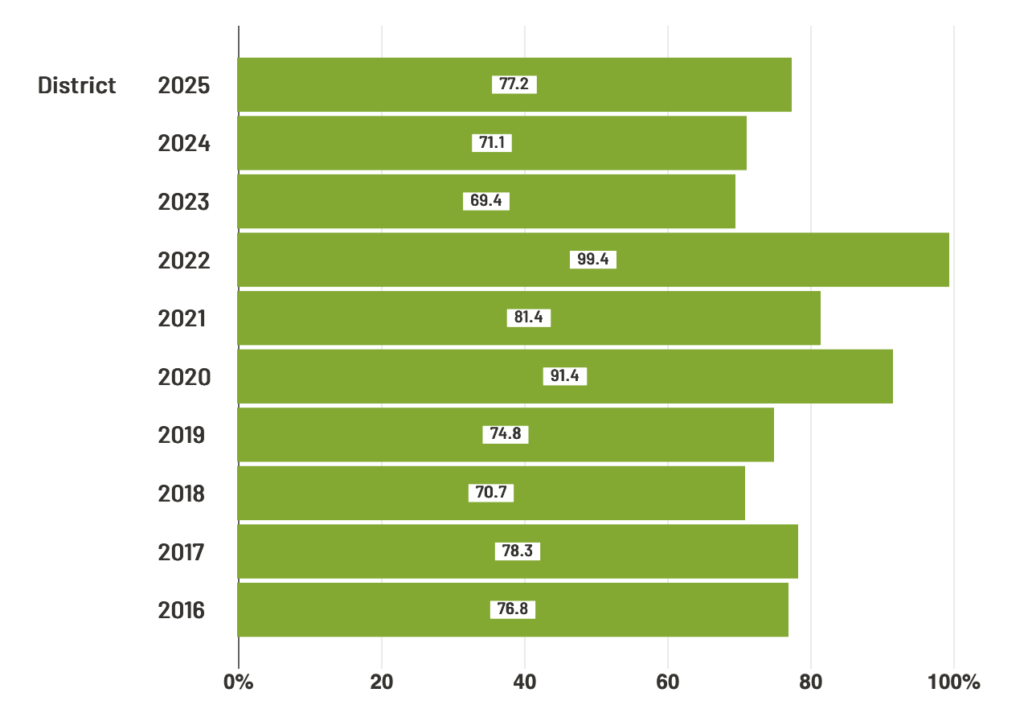
Taken together, this data illustrates that many of Illinois’ most racially diverse rural communities are also confronting disproportionately high levels of economic disadvantage. In these districts, students of color make up the majority of student enrollment, while a large majority of students are also classified as low-income and have been consistently over the past 8 years. This intersection creates overlapping barriers that can stand in the way of students’ ability to participate or succeed in career-connected opportunities.
Impact of Inadequate Funding for Rural and Small Schools
The needs of students and communities are compounded by the fiscal needs of their school districts themselves. Although many rural Illinois school districts have severe financial challenges, districts that serve low-income students and students of color are more frequently high-need against other rural districts and the state overall. This can be seen through two metrics for assessing school fiscal need: REAP eligibility and their EBF tier.
The Rural Education Achievement Program (REAP) was established to recognize the reality that rural schools have long understood: geography, small enrollment, and limited local tax capacity create unique challenges that traditional funding formulas often fail to address. Through both Alternative Fund Use Authority (AFUA) and formula-based funding mechanisms, REAP provides districts with flexibility while reducing reliance on highly competitive grant programs that often favor larger districts with greater administrative capacity.
This flexibility can be particularly valuable for CTE, where rural districts face higher per-student costs associated with equipment, facilities, transportation, and staffing. However, REAP functions more as a stabilizing force than a transformative investment. Through AFUA, districts may use portions of Title II and Title IV funds to support CTE-related activities [5]. Yet rural districts often operate in environments where nearly every dollar is already committed to meeting essential educational needs. The School Superintendents Association found that the most common uses for REAP funding were for technology, devices and software. The next highest on the list was using REAP funds for professional development and staff compensation [6]. As a result, the flexibility offered through REAP frequently helps maintain existing services rather than expand opportunities. Similarly, formula-based REAP allocations provide predictable funding streams that are easier for districts to access than competitive grants. Yet the allocations themselves are often too modest to fund major CTE expansion, like purchasing high-cost equipment, establishing sustainable transportation systems, or supporting specialized career pathways over time. In other words, REAP helps rural districts remain afloat, but it rarely provides enough funding to fully overcome structural barriers to access.
The limitations of REAP become more apparent when considered alongside broader school funding challenges within Illinois. Recent REAP eligibility data show that 258 rural districts in Illinois were eligible for the Small, Rural School Achievement (SRSA) Program grants, while 41 districts were eligible for Rural and Low-Income School (RLIS) programs, with 18 districts qualifying for both [7]. Together, these districts represent more than 60 percent of all rural school districts in Illinois, demonstrating that a majority of rural communities meet the federal criteria for additional support. Yet eligibility alone does not guarantee that districts receive the resources necessary to meet student needs. While REAP provides that flexibility and supplemental funding, many districts continue to face significant financial constraints.
These challenges are mirrored in Illinois’ Evidence-Based Funding (EBF) formula, which measures school funding adequacy by comparing available resources to the funding level needed to support student success. Under EBF, districts are assigned to funding tiers based on their level of adequacy. Among Illinois rural districts, 182 are classified as Tier 2 and 143 as Tier 1, meaning that 325 rural school districts in Illinois are well below full funding adequacy levels [8]. Only 166 rural districts are Tier 3 or Tier 4 levels. While statewide funding adequacy has reached 90.35 percent, rural districts collectively operate at just 59.2 percent adequacy.
These funding gaps carry important implications for districts serving high concentrations of low-income students and students of color. Districts such as Beardstown, Freeport, and Cairo face many of the same challenges confronting rural schools across Illinois, but must do so while serving student populations with significantly greater economic needs than both statewide and rural averages. These challenges are not isolated to these districts. Among the rural schools identified as high-diversity, 48.9 percent are eligible for REAP funding, while 51.1 percent are classified as EBF Tier 1 district, and 34 percent are classified EBF Tier 2, meaning that 89.4 percent of these districts are funded below adequacy levels. Together, this data suggests that some of Illinois’ most diverse rural districts are also among the most dependent on targeted federal support and most likely to be operating below funding adequacy. In these communities, funding shortfalls have a disproportionate impact on educational opportunities, with CTE often taking the hit due to the high-cost programming. As a result, the challenge facing many rural districts is not the absence of support programs, but the reality that existing federal and state funding mechanisms often fall short of the resources needed to fully address persistent opportunity gaps. For districts serving large populations of low-income students and students of color, these gaps can further limit access to the very programs most likely to improve student outcomes and success.
These funding challenges raise important concerns as federal policymakers consider consolidating education programs into broader block grants. While these proposals are often framed as efforts to reduce administrative burden and increase local flexibility, the elimination or significant reduction of REAP could further disadvantage rural districts by reducing dedicated support for the unique challenges they face associated with geography, transportation, and limited local resources [9]. Likewise, although the EBF formula has significantly increased statewide adequacy levels, many rural districts remain well below full funding adequacy, limiting their ability to address persistent challenges. For districts serving increasingly diverse and economically disadvantaged student populations, target rural funding remains an important safeguard for educational opportunity. The issue is not that REAP or EBF are ineffective, but rather that the scale in many rural communities continues to exceed available resources. Rather than eliminating rural support, legislators should consider strengthening both federal and state investments and incorporate accountability measures that ensure underserved student populations have equitable access to career-connected learning.
Reassessing Rural Barriers to CTE Access
Previous work by the Association of Illinois Rural and Small Schools and others has consistently shown common barriers rural schools face in expanding student access to career education. As the data above suggests, these challenges are exacerbated within districts that predominantly serve low-income and non-White students. Thus, while all rural schools require attention, there is a deeper equity challenge in the concentration of severe challenges within districts that serve marginalized communities. These common challenges include:
- Financial Barriers: Participation in some CTE programs carry additional costs that can deter enrollment. Industrial technology programs, culinary programs, lab-based coursework, certification testing, and other related costs often require student fees or other associated expenses. While these costs may appear modest to some, fees exceeding basic required school supplies can become a significant barrier for low-income students [10]. This can cause students to quietly opt out of a program instead of discussing the financial hardships. Access becomes shaped not solely by student interest or ability, but by household resources.
- Transportation and Geography Barriers: Dual credit and community college partnerships provide valuable options for CTE expansion in rural districts. However, these opportunities are not equally accessible. When coursework is delivered outside of the district, transportation becomes a determining factor. Students without reliable transportation or districts lacking transportation funding may be unable to participate, despite academic eligibility and student interest. In rural communities where travel distances are already significant, transportation functions as a core equity issue.
- Representation and Language Barriers: Access is also influenced by social and cultural conditions. Students may face language barriers, limited access to translated information, or insufficient outreach regarding available programs. English Learners and multilingual families can encounter challenges navigating or understanding pathway options. Equally important is representation. Students are more likely to envision themselves succeeding in fields where they see peers, instructors, or mentors who reflect their own identities and experiences. When students of color lack representation within career pathways or lack mentorship, participation and persistence to succeed may be affected [11]. These barriers often operate simultaneously, creating layered disadvantages that disproportionately affect already underserved populations.
The trends observed within these rural communities demonstrate that discussion surrounding rural CTE access must not only account for geography, but also for the ways in which race and socioeconomic status intersect to shape educational opportunity. When funding is limited and restricts programs, transportation, and student support, the impact is most often felt by students with the fewest resources.
Policy Recommendations
Addressing the inequities within rural CTE requires individuals moving beyond their assumptions about rural communities and recognizing the realities of rural districts. As districts become increasingly diverse and continue to serve high concentrations of low-income students, policy solutions must acknowledge the intersection of geography, race, language, and economic disadvantage so that every rural and small district receives adequate support. The following policy considerations may help strengthen equitable access to CTE opportunities across rural Illinois:
- Strengthen Rural Funding Through Existing Federal and State Mechanisms: The challenge for many rural districts is not the absence of funding, but that available resources fall short of local needs. Strengthening both REAP and EBF to better account for the unique costs associated with serving rural communities is something that should be considered. Improvements could include increasing REAP allocations, expanding eligibility within REAP, and examining whether EBF adequately captures the costs associated with geography, teaching shortages, and high-cost CTE programming. Additional consideration should be given to districts serving high concentrations of low-income students, English Learners, and students of color, where educational and economic challenges often overlap.
- Expand Dedicated Support for Rural CTE Access: High-quality CTE programs often require significant investments that rural districts can struggle to obtain or pursue. Illinois should explore dedicated funding opportunities that support CTE expansion in rural communities, particularly in districts serving high-need student populations. Investment could support industry-standard equipment, credential attainment, dual credit partnerships, and work-based learning opportunities.
- Reduce Financial Barriers to Participation: Students should not be excluded from CTE opportunities because of their families’ financial circumstances. Yet costs associated with those opportunities remain high, creating barriers for low-income students. Illinois should consider mechanisms that would assist districts in covering participation costs with approved CTE pathways and industry credentials. This would ensure that access is determined by students’ interests and career aspirations rather than household income.
- Increase Multilingual and Family Support: Rural districts are not monoliths, they are full of populations that are becoming increasingly diverse, including English Learners and multilingual families. State support for translation services, multilingual communication materials, community liaisons for extra support, and family engagement initiatives can help ensure that all students and families have access to information regarding CTE pathways, dual credit opportunities, and postsecondary options.
- Strengthen Equity Accountability within CTE: Expanding access requires more than just increasing funding, it also requires understanding who is benefiting from available opportunities. Legislators should strengthen data collection and reporting related to CTE participation, dual credit enrollment, work-based learning experiences, credential attainment, and postsecondary outcomes. Disaggregated reporting by race, income status, and English Learner status would help identify opportunity gaps and ensure benefits reach the rural students who stand to benefit the most. As rural Illinois becomes increasingly diverse, accountability systems should ensure that educational opportunities are expanding equitably across all student populations.
Conclusion
Career and Technical Education has the potential to be one of the most powerful drivers of economic mobility and career success for rural students and communities. Yet access to these opportunities remains uneven across the state of Illinois, even within rural areas. Illinois is far more diverse than many common perceptions suggest. These communities serve significant populations of students of color and low-income students while simultaneously facing many of the challenges that persist across rural education, including funding limitations, geographical barriers, and restricted access to specialized programs and career pathways. The districts highlighted throughout this report demonstrate that rural schools which serve higher-than-average percentages of low-income students and students of color are more frequently facing severe operational barriers. For many students, these challenges create additional obstacles to participating in career-connected learning opportunities. As a result, some of the students who stand to benefit the most from CTE are often the same students who face the greatest barriers to accessing it.
Programs such as REAP and EBF formula provide important support for rural districts, but the data suggest that many rural districts continue to operate below the levels to fully meet student needs. Legislators must recognize that rural equity, racial equity, and socioeconomic equity are interconnected and that expanding access to high-quality CTE requires sustained investments, targeted support, and intentional policies that ensure all students can participate. If Illinois is committed to strengthening educational opportunities and workforce development, ensuring equitable access to CTE must remain a priority for all rural students, regardless of their race, income, language, or geography.
References
[1] Illinois State Board of Education, “2025 Report Card Public Data Set” (Spreadsheet, May 14, 2026), https://www.isbe.net/pages/illinois-state-report-card-data.aspx.
[2] Daniel Showalter et al., Why Rural Matters 2025: People, Place, Possibility (National Rural Education Association, 2025).
[3] Rowlands, DW, and Hanna Love. “Mapping Rural America’s Diversity and Demographic Change.” Brookings, September 28, 2021.
[4] Illinois State Board of Education, “2025 Report Card Public Data Set.”
[5] U.S. Department of Education, Rural Education Achievement Program (REAP): Informational Document (Washington, DC: U.S. Department of Education, n.d.), https://www.ed.gov/media/document/reap-informational-document-112630.pdf.
[6] Tara, Thomas, “View From the District Rural Education Achievement Program,” (2023), https://drive.google.com/file/d/1hX3xUhFBHTMzBCnWgVAdCz6ngUGkhfGP/view?usp=sharing
[7] U.S. Department of Education, “FY26 Master Eligibility Spreadsheet” (Google Sheet, May 18, 2026), https://docs.google.com/spreadsheets/d/1H74ECn5pkqQM_odHbV34XV8HoZ8IbnOi/edit?usp=share_link&ouid=112394070760343231143&rtpof=true&sd=true.
[8] Illinois State Board of Education, “FY26 EBF Full Calc” (Google Sheet, 2026), https://docs.google.com/spreadsheets/d/1rpd5VtFXd93O8AIO9_EorGoQ2hqdvtV8/edit?usp=share_link&ouid=112394070760343231143&rtpof=true&sd=true.
[9] Jacobson, Linda. “Trump Plan Would Phase out Rural Ed Fund; District Leaders Say It’s ‘Vital.’” The 74 Million, May 27, 2026. https://www.the74million.org/article/trump-plan-would-phase-out-rural-ed-fund-district-leaders-say-its-vital.
[10] Chang Parsi, “Breaking Barriers and Building Bridges: Exploring Perceived Barriers to Participation in Career and Technical Student Organizations,” UT Electronic Theses and Dissertations, 2025. https://repositories.lib.utexas.edu/items/297bd0e1-a0b1-400f-9fa8-6c55648fe9d9.
[11] Chang, “Breaking Barriers and Building Bridges,” UT Electronic Theses and Dissertations, 2025.